
Belt filter press
Continuous duty with a gravity drainage stage. The floc has to form quickly and hold together while the belt carries it into the pressure zone.
Check: floc formation speed and drainage on the gravity deck.
Choosing a flocculant starts with the duty, not the datasheet: a belt filter press, a plate-frame press, a screw press and a centrifuge all ask different things of the same chemistry, and a cationic polyacrylamide is selected for charge neutralisation first and bridging second. This playbook uses SHN-C1492 — a dry solid supplied as white powder or granule, and a cationic polyacrylamide flocculant listed for paper, steel, dyeing and general sludge dewatering — as the worked example, then routes you by equipment, sludge type, make-down capacity and salt load so the grade you specify matches the job it has to run.
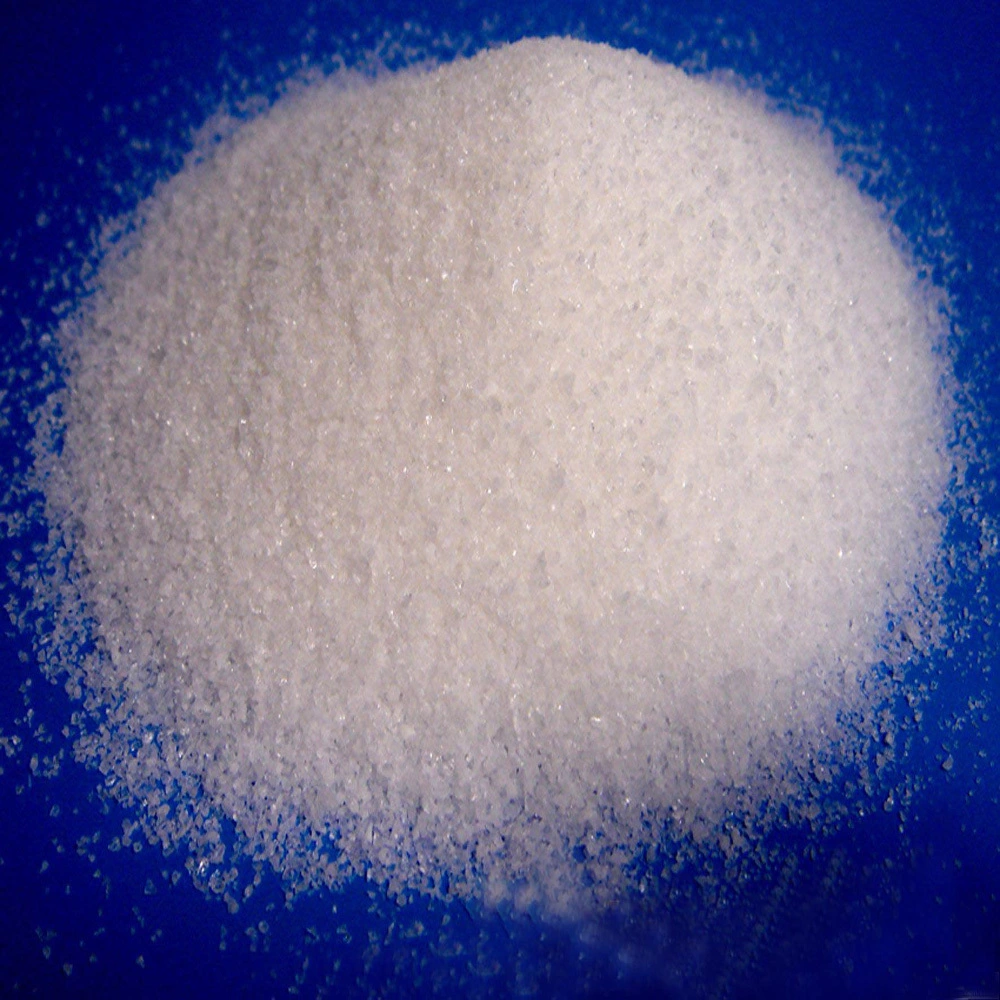
Before comparing grades, it helps to know how this one arrives at the plant gate and where it is designed to sit in the process. Everything below is taken from the published product page.
A dry cationic polymer supplied as white powder or granule and quoted per order. It is positioned for rapid flocculation and consistent sludge dewatering, with the listed applications covering paper, steel and dyeing sludge as well as general solid–liquid separation.
Your downstream machine sets the floc behaviour you actually need. Route by duty first, then check the sludge chemistry against it.
Continuous duty with a gravity drainage stage. The floc has to form quickly and hold together while the belt carries it into the pressure zone.
Batch duty under pressure. A firm, non-sticky floc that releases cleanly from the cloth and gives clear filtrate is worth more here than raw settling speed.
Slow conveying under sustained torque. The floc is carried and compressed over time, so it must resist gentle, continuous shear.
The product page states stabilisation of downstream equipment such as presses and centrifuges, but it does not publish a separate centrifuge grade rating.
Charge demand and polymer chain length decide how a stream behaves. Use the middle column to frame the question and the right-hand column as the condition to confirm before you commit to an order.
| Sludge stream | What drives the grade choice | Confirm before ordering |
|---|---|---|
| Paper industry sludge | Fines and filler loading raise charge demand, so floc size and filtrate clarity carry more weight than settling speed alone. | A jar test at your own filler loading and feed consistency. |
| Steel industry sludge | Dense inorganic solids settle readily; the polymer's contribution shows up in cake formation and water release. | Cake behaviour at the pressure your press actually runs. |
| Dyeing and textile sludge | Fine, colour-bearing solids can migrate into the filtrate if the floc is weak or over-sheared. | Filtrate clarity, not just floc size, on the drainage check. |
| General sludge dewatering and solid–liquid separation | Where the feed changes from week to week, a documented dose sweep is more useful than a single fixed setpoint. | That performance still holds at the low and high ends of your feed range. |
| Saline or chloride-rich streams | The page states high salt resistance, so the polymer is expected to keep working where dissolved salt would normally disturb chain extension. | Your real conductivity band, reproduced in the jar test. |
| Municipal sewage sludge | Not a stated application for this grade — evaluation route only. Compare against a municipal-specific option before shortlisting. | A side-by-side jar test against a dedicated municipal grade. |
This is the order that keeps a selection honest. Each step ties back to a published specification rather than to a rule of thumb.
Belt press, plate-frame press, screw press or centrifuge. The page lists the three press types directly and describes stabilisation of downstream presses and centrifuges, so the machine choice narrows the floc behaviour you are testing for.
Record solids content, pH and salinity. The pH value of 7.0–8.0 is quoted for a 0.1% solution, not for your sludge, so your own feed pH has to be measured and logged separately.
The 45–60 minute dissolving time is a plant constraint before it is a chemical property. If your make-down tank cannot give the stock that residence time, no grade will read correctly.
Match the shear in the jar to the shear in your flocculation tank. A floc that only survives gentle stirring will not survive the feed pump.
Move from jar to full scale, then write down the dose, the stock concentration and the feed conditions on the day. That record is what makes the next change comparable.
Datasheet lines are only useful once they are translated into a plant decision. The right-hand column is the practical reading of each published value.
| Published specification | Value | What it means for your plant |
|---|---|---|
| Appearance | White powder or granule | A dry solid: plan for dry storage, dust control at the feed point and a make-down step before dosing. |
| Solid content | ≥89% | Most of what you transport is active material, so dry-feed calibration accuracy matters more than the delivered weight. |
| Molecular weight | 8–10 million | Long-chain bridging behaviour. High molecular weight demands proper wetting — poorly wetted powder is the usual source of gel lumps. |
| Hydrolysis degree | 15%–20% | A moderate charge character, which leaves room to adjust dose before you change grade. |
| Bulk density | 750±50 kg/m³ | The figure to use for volumetric feeder calibration, silo sizing and bag-handling planning. |
| Viscosity | Medium | Supports pumping and metering through standard feed and dosing equipment without a bespoke transfer design. |
| Residual monomer | ≤500 ppm | A handling and specification talking point for sites with internal purchasing or EHS requirements — raise it during the quotation. |
| Insoluble matter | 0.2% max | Fewer strainer, nozzle and in-line filter blockages in the dosing train. |
| Dissolving time | 45–60 minutes | The make-down and ageing capacity you must provide. Under-aged stock behaves like a weak grade and is easily misread as a wrong product choice. |
| pH value (0.1% solution) | 7.0–8.0 | A near-neutral stock solution — compare it against your sludge pH rather than assuming the two match. |
| Storage period | 24 months | Batch and stock planning: keep dry, rotate stock first-in first-out, and do not buy beyond your consumption cycle. |
No dose figures are published for this grade, and none are offered here. What follows is a qualitative method for finding your own setpoint and for recording it so the result can be repeated.
Prepare the working solution at the dilution your make-down skid will actually deliver, and let it age for the published 45–60 minutes before testing. Testing fresh, unaged stock is the most common reason a lab result fails to reproduce on site.
Record solids content, pH and salinity for the sample you are about to treat. Without these three numbers the result cannot be compared with next week's sample.
Split the sample into equal aliquots and add increasing volumes of the same stock, keeping mixing speed and time identical for every jar. Only one variable should move.
How fast the floc appears, how large it grows, how quickly the boundary falls, and how clear the supernatant turns. A large floc with a cloudy supernatant is not a win.
Pour the treated sample through a filter cloth or a gravity drainage check. Cake release and filtrate clarity are what your press will see, and they often peak at a different dose from settling speed.
Select the lowest dose that reaches clear filtrate with a firm, release-friendly cake, then scale by the volume ratio between the jar and the plant feed. Treat the plant result as the final confirmation.
The product page states compatibility with standard polymer feed, dosing and mixing equipment. These are the set-up points that decide whether that compatibility turns into stable performance.
Use this table before changing product. Most dewatering complaints trace back to make-down or dosing rather than to the polymer itself.
| Symptom | Likely cause | Action |
|---|---|---|
| Weak or slow floc formation | Stock under-aged, or made at the wrong dilution | Extend the ageing step within the published 45–60 minute window and re-check the dilution before re-testing the dose. |
| Gel lumps in the make-down tank | Powder added too fast, or water added to polymer | Correct the addition order, slow the feed rate and improve dispersion at the wetting point. |
| Floc breaks up on the belt | Excess shear between injection and drainage | Move the injection point closer to the process, reduce transfer-pump speed and re-run the drainage check. |
| Cloudy filtrate with a large floc | Dose or charge mismatch rather than floc size | Repeat the dose sweep, watch supernatant clarity, and compare against a higher-charge option such as the municipal grade below. |
| Sticky cake, cloth blinding | Overdosing | Reduce the dose to the lowest point that still gives clear filtrate and watch cake release return. |
Supply is quote-based — the product page lists no price and no checkout. Send your process details and the team can respond with a grade recommendation and a quoted offer rather than a generic list price.
Keep adjacent product options together for a faster catalog comparison.
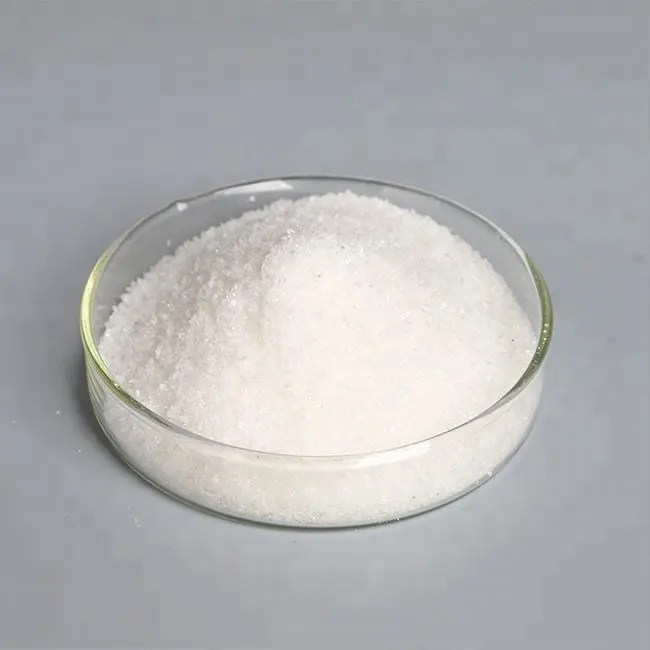
Ensure optimal sludge dewatering with our cationic polyacrylamide powder. As a reliable polyacrylamide manufacturer, we provide consistent, high-grade solutions.
View product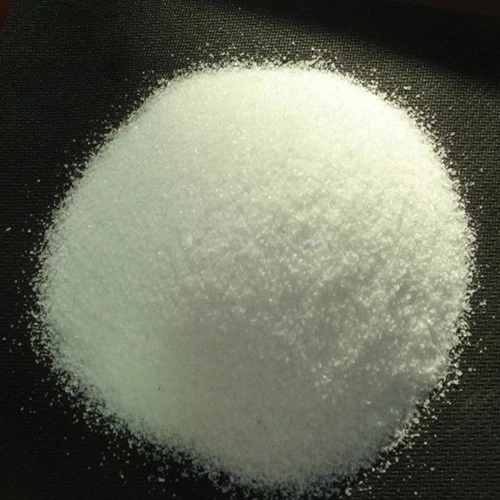
High-performance polyacrylamide polymer engineered for saline water treatment. Sourced from a trusted polyacrylamide manufacturer for industrial efficiency.
View product
Source high-performance polyacrylamide from a leading polyacrylamide manufacturer. Optimize solid-liquid separation and mineral processing with our powder.
View productreview the product details, images, and specifications presented on the official product page.
use the application and use-case information published on the official product page.
confirm the specifications and options listed for the exact product variant before placing an order.
check the official product page or ask the supplier about options shown for the selected product.
use the official contact or inquiry path provided on the site.
include the product page, intended use, required quantity, and any specifications you need the supplier to review.
